

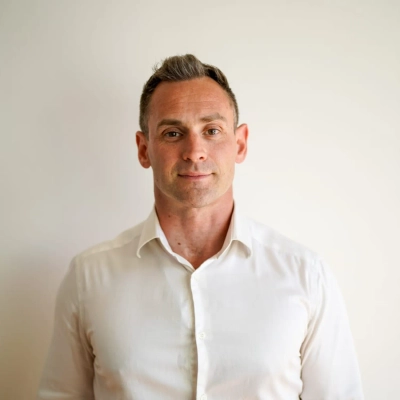
David Garner · November 7, 2026
As a General Manager working in international real estate, can you introduce yourself and explain the expertise you bring to helping foreign investors buy U.S. rental properties?
I'm a British citizen who started buying rental properties in the United States in 2016. Between 2016 and 2022, I scaled my portfolio from zero to 124 properties. We mostly bought the cheapest possible properties and rented them out, often to Section 8 tenants.
Then, in 2023, our portfolio collapsed. The reality of owning and managing cheap houses in bad neighborhoods, along with issues with bad real estate agents and contractors, started to bite. Between tenants not paying rent or causing damage to our properties, deferred maintenance issues, overvalued properties, poor-quality renovations delivered by contractors, and a wave of evictions and vacancies, our monthly cash flow fell from a positive $30,000 a month to negative $60,000. Within six months, we had burned through hundreds of thousands of dollars in cash reserves and were unable to make our mortgage payments.
After the carnage of foreclosures, short sales, and heavy personal losses, we rebuilt a new portfolio around the lessons we learned. We learned the hard way what not to buy and how to manage U.S. tenants more effectively from overseas. Today, we have a much smaller 30-property portfolio that performs far better than everything we owned before.
What career experiences led you from investing in U.S. rentals as a non-resident yourself to guiding overseas clients through deal sourcing, due diligence, and investment structuring?
Unfortunately, there are lots of companies out there selling foreigners the kind of cheap, poorly maintained properties in bad neighborhoods that I owned. Often, this sales pitch comes in the form of “guaranteed passive income” when a Section 8 lease is involved.
The reality I learned through bitter experience is that those properties in those neighborhoods are best suited to local investors who are capable of self-managing and dealing personally with the inevitable issues that arise. For a remote investor many thousands of miles away, those problems compound and can very quickly run into tens of thousands of dollars.
From your conversations with overseas clients, what are the main reasons foreign investors are increasingly choosing U.S. rental properties over real estate opportunities in their home countries?
There are lots of reasons foreigners choose to invest in U.S. real estate. Much of it depends on where the buyer is from.
First, the U.S. is one of the most accessible global property markets. There are very few restrictions on who can buy here. There are some state-level restrictions on certain types of ownership for residents of some countries. For example, under Florida’s SB 264 (2023), persons domiciled in a “foreign country of concern” who are not U.S. citizens or green-card holders cannot acquire agricultural land in Florida or any real property within 10 miles of a military installation or critical infrastructure facility. Buyers domiciled in China face a broader ban on acquiring almost any Florida real estate. None of this affects the vast majority of international buyers, and none of the markets I work in across the Midwest have comparable restrictions.
My Latin American clients tend to want dollar-based assets and income due to the more volatile nature of the economy and currency in their home countries. They feel that owning physical real estate that generates dollar revenue is a safer long-term bet than their domestic stock market or local property markets.
My European clients are more motivated by diversification. They often find a lack of quality opportunities in their domestic real estate markets, and the increasing regulatory and tax burden of owning property and being a landlord in some European countries, such as the UK, where I’m from, has pushed them to look further afield.
For all overseas investors, one of the biggest drivers of interest in the U.S. market is the availability of financing for foreigners. We use foreign national DSCR loans to purchase our properties, so we don’t need a Social Security number, U.S. address, or U.S. credit to qualify for the loan. All you need is a rental property that meets the lender’s criteria in terms of rental income and operating costs. If the rent covers the mortgage, taxes, and insurance, you can most likely get approved. That’s a huge benefit for residents of countries where financing is based on the person rather than the property, where there may be limits to the number of loans you can hold, or where mortgages are just not available at all.
You have noted strong interest from investors in countries such as Argentina and Brazil; how does economic or political uncertainty at home shape the way these buyers evaluate the U.S. rental market?
It's certainly a factor. I've spent a lot of time personally in both of those countries, and we've also helped clients from Colombia, Ecuador, and Chile. As I mentioned, economic and fiscal volatility at home drives their appetite for stability, and the U.S. market and U.S. dollar are very attractive to those folks.
Also, I think the American Dream is more alive in some of those countries than it is in the U.S. right now. Culturally speaking, many residents of those countries consider the United States aspirational, and owning property there can be seen as somewhat of a status symbol.
As some foreign buyers move away from coastal markets toward places such as Cleveland and other Midwest or Northeast metros, what signals do you use to identify a market with durable rental demand?
We have a multi-layered approach to market analysis. We look at the state, city, and county and their regulatory frameworks. Is it safe to own property there? What do landlord-tenant laws look like? Can you evict a non-paying tenant, for example?
But when we're analyzing specific properties, we're casting a much narrower net. We're looking at the neighborhood, street, and house. We're looking for neighborhoods that are improving and on a positive trajectory: a falling crime rate, proximity to a growing job market, improving schools, a declining poverty rate, a falling eviction filing rate, and household incomes that are consistently growing in real terms. We're also looking at whether local residents can afford the rent. All of this analysis is done at the block and street level.
This is a big mistake I see a lot of overseas and even U.S. investors make. They'll look at crime, jobs, and population statistics for a ZIP code. But that's far too large a data sample to be relevant to any particular street, and it can hide the areas you should be avoiding, as well as where the real opportunities are.
Recently, we ran our analysis on two houses in a Kansas City suburb. They were on the same street, in the same ZIP code, and 1.2 miles apart. Based on ZIP code data, they looked like the same house, but one had a rising crime rate, a poverty rate that had doubled over five years, and rising numbers of vacant houses and evictions. The data for the other house showed the opposite: rising household income, a declining crime rate, and a poverty rate that had halved. One of those houses had the potential to be a great rental investment. The other one was likely to be a real problem for whoever bought it.
One thing we've learned over the past 10 years is that your long-term profitability will be closely tied to the neighborhood and street you buy in, even more so than to the house itself.
When evaluating a potential single-family or small multifamily rental, what does your due-diligence process reveal that overseas investors may otherwise miss from afar?
Aside from the detailed neighborhood analysis I already discussed, we get a general home inspection, a sewer scope, usually a pest inspection, and an independent appraisal. These are often missed by overseas buyers who deal directly with investment property sellers that provide only in-house comparable values and walkthrough photos or videos showing the property's condition.
We find all sorts of issues during inspections, even in newly renovated turnkey rental properties. Earlier this year, an inspector spotted an issue with the sewer line in the basement of a property our client from Asia was buying. We had a specialist come out to check it, and it turned out that the line had collapsed under the basement floor. We had the seller pay for the repair, which came to over $9,000. Without an inspection, our buyer would have owned that problem—and the bill.
If we're buying a turnkey property, we also review the lease and tenant file. We have our own internal screening process and criteria for leasing, and if an application accepted by someone else wouldn't have passed our filter, we don't want that tenant.
Foreign buyers often value greater control over their investments; how can they structure ownership, financing, and local property management so that control does not become an operational burden?
In terms of structuring their investment, I recommend having a cross-border tax expert on hand to make sure they set up the most appropriate type of entity to hold their U.S. property. An LLC isn't always the right choice for everyone. Canadians, for example, are often better suited to a U.S. limited partnership because of a discrepancy in how the CRA and IRS view a U.S. LLC. Getting the structure right before they start is much better than trying to fix it later and potentially facing liability or tax consequences in the U.S. or at home.
We also connect our clients with a small group of specialist U.S. mortgage lenders who understand foreign national borrowers and have specific products and underwriting processes designed for them. That space has evolved a lot since I started buying in the U.S. I only wish I had access back then to the type of financing my clients have access to today. We were able to secure a 30-year fixed-rate DSCR loan at 7.25% for a foreign national with no U.S. credit, while U.S. homebuyers are paying 7.49% (Mortgage Bankers Association, Mortgage Applications Survey, released October 7, 2026).
Property management is something we help our clients with on an ongoing basis. Managing rentals from overseas can seem daunting—and it is. There is a lot a foreigner might not understand about the legal system and property management regulations, especially if they are very different from those in their home country, which they often are. For example, we're currently mentoring a German client through an eviction in Cleveland. It's not a nice thing to have to do, but understanding the process and legal requirements is essential.
We continue to mentor our clients through the process after they close, making sure they have expert advice on hand to make good decisions when the time comes.
Based on your experience with cash buyers negotiating in a higher-rate environment, what is one practical negotiation approach foreign investors can use to pursue a better rental-property deal without sacrificing quality?
This is exactly what we're focused on right now. Everyone knows it's a buyer's market, and we're using that to our advantage.
Most of the sellers I deal with are contractors who have renovated homes. More often than not, they've used expensive, short-term hard money loans to fund their purchases and renovations. Now they need to pay them back, but the retail market is flat. That's given us the opportunity to negotiate much better deals.
Typically, we'll negotiate a discount and use some of it as a seller credit to cover our buyers' closing costs. Most foreigners don't understand how high closing costs can be in the U.S., and reducing their cash to close without reducing their equity is a very attractive proposition to most. If there's enough in the deal, we can also use it to buy down their interest rate and improve their cash flow.
If you structure a deal well, you can reduce your cash to close by thousands of dollars and, at the same time, get a lower rate on your mortgage. It's a win-win.
For foreign investors considering their first U.S. rental acquisition, what is the most important step they should take before making an offer to protect both the property’s long-term returns and their investment structure?
Speak to someone with experience in the market as a foreigner, whether that’s a real estate agent who has worked with overseas buyers or a company like mine. Get advice on the right type of structure to set up, and start speaking to lenders with a dedicated foreign national DSCR loan product.
But by far the biggest and best piece of advice I give every client is this: don’t get fooled by numbers on a spreadsheet, as I did when I started out. Very often, the highest “on-paper” returns don’t turn out as you hope. There is a direct relationship between risk and return, and that’s a lesson we should all remember.
Disclosure: Cashflow Rentals does not earn referral fees or commissions from the lenders, tax advisors, or property managers we refer clients to.
This content is for informational purposes only and should not be considered financial or investment advice.
This article was first published on Featured News.