

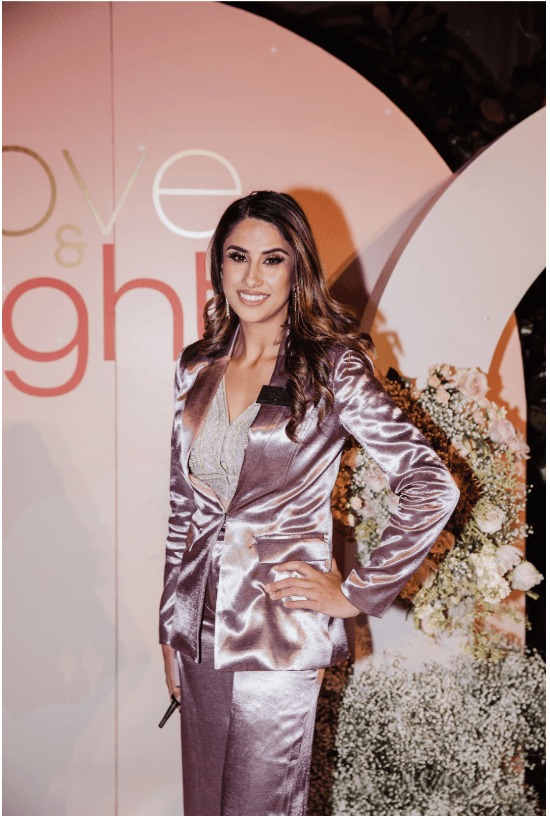
This interview is with Shumaila Panhwar, Founder at SoCal Event Planners, LLC.
Shumaila Panhwar, Founder, SoCal Event Planners, LLC
Can you introduce yourself and tell us about SoCal Event Planners? What makes your approach to wedding and event planning unique, especially in the South Asian wedding market?
I am Shumaila Panhwar, owner & Founder of SoCal Event Planners, a luxury planning firm in Southern California! What started over 13 years ago as a passion for creating beautifully organized, stress-free events has now grown into a full-service planning and design team that has produced 1,000+ weddings and celebrations across the U.S. and internationally.
What sets my approach apart is the balance of deep cultural understanding, luxury-level organization, and a genuinely people-first philosophy. South Asian weddings aren’t just events — they’re layered, emotional, multi-day experiences filled with tradition, family dynamics, and high expectations. I plan with that in mind.
I understand not just what the traditions are, but why they matter. From Nikkah and Baraat logistics to mehndi flow, sangeet performances, muhurat timing, imam coordination, and multi-generational needs, I design timelines and experiences that honor culture while still feeling modern, elevated, and seamless.
My approach is also very high-touch and boutique. I take the time to understand each family, their story, and their sensitivities. That allows me to anticipate challenges before they surface and create events where everyone feels taken care of — elders, parents, bridal party, and, of course, the couple.
What inspired you to start your own event planning business, and what was the journey like from your first client to running a company that handles over 100 weddings a year?
I started SoCal Event Planners because I saw a real gap in the market — especially in the South Asian community — between what families needed during major life events and what was being offered. There was no real concept of a "planner" and it took years for me to get clients and their families to understand and value our role. Growing up attending South Asian weddings, I watched families juggle intense traditions, large guest lists, and complex multi-day logistics with very little professional support. I knew there had to be a better, more seamless, more thoughtful way to plan these celebrations. When I first started, my background was Corporate & Charity Events, I didn't have any experience in weddings. I jumped right in and never looked back!
You mentioned creating a 'uniformed system' was key to scaling your business. Can you walk us through what that actually looks like in practice when every wedding has such unique needs?
People often assume that because every wedding is unique, the planning process must be reinvented from scratch each time. In reality, the only way to scale — especially when handling 100+ South Asian weddings a year — is to create a uniformed system behind the scenes, while still allowing the front-end experience to feel completely personalized. It all starts with intake & getting to know the clients and their needs. The questionnaire & intake calls set the tone for the entire process. Next is budget estimates & vendor options in an easy-to-digest way. And of course, templated systems for timeline creation, vendor logistics and all project management. Ensuring there is a clear process helps manage the expectations up front and the outcome.
Southern California has such a competitive event planning scene. How do you balance staying true to cultural traditions while also meeting the modern, design-forward expectations of your luxury-focused clientele?
It’s definitely a balance — but it’s also where we thrive. South Asian weddings are rooted in centuries of tradition, yet today’s couples are also incredibly design-conscious. They want an event that honors their heritage without feeling dated or overly conventional. My approach bridges both worlds with intention.
First, I start with cultural integrity. I never compromise the meaning behind rituals, whether it’s the Nikkah timing, the significance of the Mandap, the order of rasams, or how elders expect ceremonies to flow. I take the time to understand family dynamics, religious requirements, and the emotional weight these traditions carry.
Then, I bring in the modern, luxury-forward design lens that Southern California is known for. This might look like: clean, contemporary mandap structureselevated color palettesmodern floral artistrythoughtful lighting designminimalist signageintentional guest flowimmersive moments that feel curated rather than chaotic.
I’m always asking: How do we preserve the tradition, but present it in a way that feels fresh, elevated, and aligned with the couple’s aesthetic?
Because our clients expect both — cultural depth and visual sophistication — every decision is filtered through that dual lens.
Finally, staying competitive in Southern California means constantly evolving. I travel for inspiration, collaborate with top-tier designers, and study global trends, but I also ground everything in what makes South Asian celebrations emotionally powerful. I think the concept of always being a student is key. You're never too old to learn and evolve.
The result is an experience where: families feel respected, couples feel seen, and guests walk into a space that feels culturally rich yet visually stunning.
That blend — honoring heritage while delivering high-end design — is what truly sets us apart in this market.
What's one lesson you learned the hard way during a multi-day South Asian wedding that completely changed how you plan or manage events now?
One lesson I learned early on — the hard way — is that in multi-day South Asian weddings, clarity is everything, especially when it comes to family roles and decision-making.
At one of my first large multi-day weddings, I assumed everyone was aligned simply because they said they were. I had the couple’s preferences, the parents’ preferences, and what seemed like a clear plan. But on the actual wedding weekend, it became obvious that different family members had different expectations — and they all believed their version had been communicated. Suddenly, there were conflicting opinions on ceremony order, timing, entrances, seating… all coming from people who genuinely cared but hadn’t been part of the earlier conversations.
Even though the event still turned out beautifully, I walked away realizing something crucial:If you don’t establish one unified communication structure and one decision-maker from each side of the family, small misunderstandings can snowball during a high-stress, multi-day celebration.
You're a strong advocate for organic marketing over paid ads. For other women-owned small businesses in the wedding industry, what's one specific thing they can do this week to start building that authentic connection with potential clients?
Always be true to yourself. We're not selling a tangible item - we are selling a service and behind that service needs to be trust and a bond. When clients come to us, they're looking for someone who is going to guide them throughout the process and ensure their best interests are always top of mind.
When you work with integrity and lead with honesty, clients feel it immediately. That authenticity becomes your strongest marketing tool. A strong reputation and word of mouth goes a long way. Showcase your personality and strengths through your instagram.
I used to think being lighthearted and funny online, may look unprofessional, and then quickly realized that potential clients like to see the personalities of the small business owners they're working with. So whether being true to yourself means writing a blog and sharing your knowledge, doing a Tik Tok Trend or simply doing an amazing job and repeating it all over again, do what feels like YOU!
When you're managing four to seven back-to-back events with huge guest lists and strong family opinions, how do you stay calm and keep your couples actually enjoying their own celebration instead of drowning in stress?
Honestly, staying calm is both a mindset and a system. Multi-day South Asian weddings come with big personalities, big emotions, and big expectations — so if I’m stressed, everyone around me feels it. My job is to be the steady anchor when everything around the couple is moving at full speed.
The first thing I do is create structure long before the wedding weekend begins. Clear communication, defined decision-makers, realistic timelines, and pre-approved plans remove 90% of the chaos that typically overwhelms couples. When things are aligned in advance, the wedding weekend becomes execution, not guessing.
Travel often plays a huge role in destination weddings and sourcing inspiration. How has travel influenced your design aesthetic or the way you approach planning events for your clients?
Who doesn't love to travel? Experiencing new cultures, food and history is always fun. But planning a destination wedding? It's definitely a daunting task and can be made to be a much more seamless process with the right planner. On the planning side, destination events sharpened my approach to logistics in complex environments.
Working with vendors across language barriers, navigating historic venues, and coordinating events surrounded by constant movement taught me how to stay calm, adaptable, and resourceful — skills that directly translate to multi-day South Asian weddings.
One wedding in particular that we had in Istanbul, Turkey was especially memorable. We used the Bosphorus Sea as the backdrop of the event and incorporated Turkish elements within the design - from ornate lamps to deep blues and golds, we made sure to keep the look true to the space. Additionally, the welcome bags within each guest room showcased a bit of Turkey from including Turkish delights as snacks to a Pashmina Shawl adorned with the couple's logo, we made sure to make it an immersive experience.
Looking back at your entrepreneurial journey as a woman running a small business in this industry, what's one piece of advice you wish someone had given you before you started—something that would have saved you time, money, or stress?
There are two things I wish someone had told me early on:
1. Even if others don't understand your vision, keep going.
2. You don’t have to say yes to every client, every event, or every request to build a successful business.
When I first started, clients didn't understand my role and educating them on what a coordinator event did was half the battle. Because of the lack of understanding & no demand for coordinators, I felt I had to take on everything, accommodate everyone, and “earn” my place. I said yes even when the red flags were clear, even when the scope was unrealistic, and even when I knew it would drain my time, energy, or team. Those moments cost me the most stress and, ironically, slowed down my growth.
The advice I wish I had heard is: Your boundaries are part of your business strategy. Not a weakness, not a limitation — a strategy.
And what I learned the hard way is this: When you enforce boundaries, the right clients become magnetized to you — and the wrong ones filter themselves out.
It saves time. It saves money. It protects your mental health. And it allows you to focus on the work that actually fulfills you and grows your business.