


Small Biz Leader · June 22, 2026
Small business owners face a critical choice when hiring: should they invest in candidates with proven track records or take a chance on high-potential talent who may lack direct experience? Industry leaders and business strategists share practical frameworks to help employers assess trade-offs between immediate capability and future growth. This article presents expert-backed strategies for making hiring decisions that align with company stage, operational needs, and long-term success.
 OR
OR CF
CF ME
ME BR
BR JB
JB SM
SM RL
RL Louis Ducruet · Oz Rashid · Carl Fanaro · Matt Erhard · Billy Rhyne · Justin Belmont · Soumya Mahapatra · Raphael Larouche · Kimberly Mordasky · Eli Zimmer · Orrin Klopper · Olivia Parks · Douglas Van Soest · Andrew Gazdecki · Jonathan Freed · Runbo Li · Kyle Barnholt · Jonathan Stiebel · John Baethke · Marcel Perkins · Michael Law · Saulo Canny · Jeremy Maher
Run A Real Paid Trial
Louis DucruetFounder and CEO, Eprezto
The thing that made this call reliable at Eprezto was stopping the debate over the resume and testing the actual work instead.
The instinct is to weigh experience against potential on paper, the seasoned hire's track record versus the newcomer's promise. Both are guesses. A resume tells you where someone has been, not how they think on the problem in front of you, and a hopeful read of potential is just optimism with a title.
We are a lean team of under ten, so a wrong hire is expensive and obvious. Instead of choosing on hypotheticals, we use a paid working test on a real task. We give both candidates an actual piece of the job, not a brain teaser, and we watch how they approach it. The seasoned candidate sometimes reveals they are rigid, doing it the way their last company did. The newcomer sometimes shows judgment the resume could never have promised.
The screening prompt I would name is the test itself plus one question after it: tell me one thing about how you did this that you would do differently next time. That answer separates people faster than years of experience. It shows whether they can see their own work clearly, which is the trait that actually predicts growth in a small company.
The mechanism is that real work surfaces real behavior. Experience and potential both collapse into the same evidence once you watch someone do the thing.
The honest part is that this costs you, a paid test takes time and money. But it is far cheaper than choosing wrong on a key role because someone interviewed well.
My advice is to stop choosing between the safe resume and the exciting one. Give both candidates a real, paid task, watch how they work, and ask what they would change. Demonstrated judgment beats both seniority and promise.
Prioritize Preparation And Defeat Bias
I try not to frame it as seasoned versus newcomer at all. A resume is ten percent of the person and a job description is ten percent of the job. What I'm really doing is collecting data points and suspending judgment, keeping the funnel open so the right person reveals themselves instead of me jumping to a conclusion off a page.
The screening prompt I lean on is dead simple. What research did you do to prepare for this? The separation is in the preparation, and a high-potential newcomer who shows up having dug into your business tells me more about urgency and curiosity than ten years on a CV.
And I'll tell you a story on myself, because seasoned people fool you in the other direction. We interviewed a VP once. He told me he played point guard, said he valued the assist over the point, and I love basketball, I was a point guard, I'm a Suns fan. I caught myself afterward. I was so busy nodding at a guy who mirrored my own values that I went soft on the rest of the questions. That's confirmation bias. My bar fixes it. Hell yes or no. If I'm rationalizing to fill the seat, that's the number one cause of a bad hire.
Pose Gritty Scenario Spot Readiness
Carl FanaroPresident, NOLA Buys Houses
Here's my hiring trick. I'll ask how they'd handle a duplex with a caved-in roof and overdue taxes. The seasoned vets immediately name vendors and the right forms. The new person, well, they have ideas but get stuck on the specifics. It tells you right away who's ready for the dirty work.
Match Candidate To Company Stage
Matt ErhardManaging Partner, Summit Search Group
As a recruiting firm leader, I regularly work with small business owners to help them fill key roles. What I've found is that this decision is rarely a matter of the candidate's experience alone. What it really comes down to is the stage of the business and the problems that whoever takes the role will be expected to solve.
For me, when the company needs someone who can build processes, provide mentorship, or navigate complex challenges, I tend to lean toward the seasoned candidate. Small businesses often lack the infrastructure or leadership bandwidth to support a steep learning curve, so bringing in someone who has navigated these types of challenges before is beneficial.
Where a high-potential newcomer can be an excellent choice is when the organization has strong leadership in place and has the resources to invest in development. In these situations, I've seen ambitious and adaptable younger professionals outperform more experienced candidates because they were eager to learn and grew alongside the business.
It comes down to the gap between the role's requirements and the support the company can realistically provide. When there's less room for mistakes or extended ramp-up time, that's when someone with proven experience becomes highly valuable. When there's space for coaching and growth, potential becomes more attractive.
A screening prompt that often helps me make this call is "Tell me about a time you were asked to solve a problem you'd never encountered before. What steps did you take, who else did you involve, and what was the outcome?"
This question is revelatory for candidates at many experience levels. Seasoned candidates can demonstrate how they applied lessons from their past experience, while emerging talent can show how they adapt and navigate uncertainty. Unexpected challenges are a daily reality in small businesses, so evaluating how candidates will approach them is often a better predictor of success than past experience alone.
Make Day-One Notes Guide Choice
Billy RhyneCEO & Founder | Entrepreneur, Travel expert | Land Developer and Merchant Builder, Horseshoe Ridge RV Resort
I've stopped choosing on the resume and started choosing on the first 30 days.
At our resort, a seasoned hire shows up knowing the playbook, which is great until the playbook doesn't fit your property. A high-potential newcomer shows up watching everything. My best front-desk hire in three years came in with zero hospitality experience. What she had was the instinct to notice what was broken and say so out loud.
So here's the screening prompt I use now. I tell the candidate that in their first month I'll have them keep a notebook of everything that feels broken or dumb to them, then ask them to name one thing from their last job that would've gone in that notebook. A seasoned candidate who's coasting gives me a non-answer. A real one lights up and lists three.
Pick the seasoned hire when the role needs day-one judgment and no ramp time. Pick the newcomer when the job is mostly attitude and you've got someone to train them. On a small team, attitude compounds. You can teach the rest.
Weigh Certainty Versus Upside
Justin BelmontFounder & CEO, Prose
When I'm hiring for a key role, I don't think of it as a choice between experience and potential. I think of it as a choice between certainty and upside. If the role requires someone to build a system from scratch, manage clients immediately, or operate with very little oversight, I lean toward the seasoned hire. If the role has room for coaching and the person shows exceptional curiosity, adaptability, and ownership, I'm often willing to bet on potential.
One screening prompt that's helped me make the right call is: "Tell me about something important you taught yourself with no formal training, and walk me through exactly how you did it." Experienced candidates reveal how they solve problems and continue learning. High-potential candidates reveal whether they're resourceful enough to grow faster than their resume suggests.
I've found that great hires in small businesses are rarely defined by what they know today. They're defined by how quickly they can figure out what they don't know tomorrow. The candidates who can demonstrate self-directed learning, initiative, and sound judgment often outperform candidates with longer resumes but less adaptability.
Invite Role Ideas Gauge Fit
We want to hear their ideas for the role. Learning what a candidate thinks about the role and what their ideas are for how they might take it on or what they might implement gives such good insight into how good of a fit a candidate might be. Often, existing employees have an excellent point of view due to their experience in the company and knowledge of the industry. But sometimes a newcomer shows up with a fresh perspective that may be even more valuable.
Favor Judgment When Bets Matter
I hire for the trait that is hardest to teach, and in a small shop that is judgment, not experience. A seasoned hire is faster on day one. A high-potential newcomer with good instincts is better in month six and cheaper the whole way. So I default to potential unless the role would actually break things if someone learns on it. The screening question that sorts them: "Tell me about a time you decided not to do something a client or boss asked for, and what happened." I am not looking for rebellion. I am listening for whether they can think past instructions and own a call. The seasoned people who only ever followed orders fall apart here. They give me a non-answer or a story where they just complied. The sharp newcomers light up and tell me about a real judgment call, even a small one. That answer tells me more than ten years on a resume. Skills I can train in a few weeks. The ability to make a good decision when I am not in the room is the whole job in a small business.
Value Empathy For Client Chaos

Kimberly MordaskyOwner, Veterinarian, Hebron Veterinary Hospital
In a small-business setting, adapting to and fitting into the team culture is essential, so when we are hiring for an important client-facing role at our veterinary hospital, we tend to choose newcomers over those with years of experience. Seasoned professionals might have established routines and ingrained ways of working that are almost always difficult to change. Alternatively, someone new to the field is often more open-minded and eager to learn about the Hebron Vet approach. Training someone on our specific tools and processes is easy, but qualities like genuine empathy and calming presence are much harder to instill from scratch.
A question that we use to identify these qualities answers how candidates will respond when faced with competing demands. We will ask, "A phone is ringing, a frustrated client is standing in front of you complaining about a long wait time, and a coworker urgently needs your attention. Walk me through your exact next 60 seconds."
A seasoned candidate will often give a robotic, strictly policy-driven answer. A high-potential newcomer, however, reveals their baseline emotional intelligence. We look for the candidate who explains how they would take a breath, make eye contact to acknowledge the upset person with genuine empathy, quickly triage the coworker's need, and manage the phone. That natural ability to regulate stress while remaining deeply human is what proves they are the right long-term investment for our team.
Compare Objectively Probe Career Goals

We always approach these situations from as neutral of a standpoint as possible. The high-potential newcomer isn't always going to be the best choice, and neither is the seasoned hire. You have to look at both as objectively as possible and weigh the pros and cons of each individual person. Something that often helps when the decision is difficult is learning about their personal career goals. This often gives insight into their likely longevity in the company and their potential for further advancement.
Protect Culture And Balance Delivery

I've grown Netsurit since 1995 through acquisitions like Vital I/O and iTeam while preserving culture across multiple US offices. This experience shows me how hiring decisions shape both immediate delivery and long-term momentum in IT services.
I select based on whether the candidate will strengthen our people-first model rather than just fill a skill gap. Seasoned hires bring process knowledge while high-potential newcomers often accelerate innovation when paired with clear cultural anchors.
One screening prompt I use is: "A new client system goes down during a team member's scheduled time for their personal development goal--what steps do you take first?" This reveals whether they default to pure execution or balance client needs with the growth focus that has kept our teams intact post-acquisition.
Choose Character Over Credentials
Olivia ParksOwner + Lead Organizer, Nola Organizers
When hiring for a key role, I don't automatically choose the person with the most experience. In a home service business, character and professionalism matter just as much, if not more.
For our team, one screening prompt I always come back to is: "Would I trust this person alone in a client's home?"
The reason is simple: organizing skills can be taught. Systems can be taught. Processes can be taught. But it's much harder to teach someone how to be respectful, professional, dependable, and a good teammate.
We're working inside our clients' homes, often during personal and stressful situations. I need team members who communicate well, treat clients with respect, collaborate with coworkers, take direction professionally, and represent our company the right way.
If I have to choose between a highly experienced candidate and someone with slightly less experience but stronger character, professionalism, and people skills, I'll usually choose the latter. In my experience, those qualities are what lead to long-term success.
Screen For Self-Reliance Under Strain

Hi, my name's Doug Van Soest, owner of Storology Storage, with facilities in Tyler, TX and Roswell, NM.
When I filled the facility manager role at our Tyler location, most of the experienced candidates had come from larger storage chains. They knew the corporate workflow but didn't do well when there was no chain of command to escalate to, which for us is basically always.
Since then I've leaned toward high-potential more often than not, mostly for hands-on roles like this. You sometimes get a lot of habits along with the experience, you know, and some of those don't translate well to a smaller operation where one person has to figure things out on their own.
The screening question that shifted things for me: "Walk me through what you do when something goes wrong and I'm not reachable." I'd tell them to think of a real situation, not make one up.
The people who worked out would start describing what they tried on their own first, before they ever thought about calling anyone, and there was usually something in there I hadn't expected to hear.
Doug Van Soest, Owner, Storology Storage
Pair Operators With Growth Terrain

You can learn all sorts about that from how and why I hire. In a tight spot where the core product is unstable, I prefer stable hands who have seen it all. But when we're planting new ground, I like someone with grit who can hit the deck and start running.
In the three-odd years we've hired that way, I'll take that person's stories about cracking plateauing growth than a more traditional resume. I particularly like "Tell me about a time you took a SaaS business off plateaued MRR using no outside capital." The true operators light up when you say that.
Safeguard Confidentiality And Consistency

Jonathan FreedOwner & CEO, Reprive House
Running Reprieve House for high-profile executives showed me that hiring decisions directly shape client trust in a confidential setting. I built the team around people who could deliver individualized care while upholding strict privacy protocols from day one.
Seasoned hires bring immediate command of clinical processes like private intakes and NDAs, which kept operations smooth during early growth. Newcomers often adapt faster to our first-name-only culture, learning to support long-term well-being without carrying prior assumptions from larger facilities.
One prompt that clarified the right fit was: "How have you protected sensitive information when working with someone in a vulnerable position?" The answers revealed whether the candidate prioritized consistency over convenience, matching the accountability we need in recovery work.
Bet On Speed To Learn

I'm Runbo Li, Co-founder & CEO at Magic Hour.
Hire for slope, not y-intercept. In a small business, the person who's learning fastest will outperform the person with the best resume within six months. Every single time. Seasoned hires bring pattern recognition, but they also bring calcified habits from environments that look nothing like yours.
Here's how I think about it. At Magic Hour, David and I run a platform with millions of users as a two-person team. We can't afford someone who needs the scaffolding of a big org to function. We need people who can figure things out in ambiguity, who treat constraints as creative fuel rather than blockers. That's almost always the high-potential newcomer, not the person who spent ten years at a company with 14 layers of management.
The screening prompt I use is simple: "Tell me about a time you had to produce a result with almost no resources, no playbook, and no one to ask for help. What did you do in the first 48 hours?"
The seasoned hire will often talk about delegating, escalating, or referencing how it was handled at their last company. The high-potential person will describe the scrappy, ugly, creative thing they actually did. They'll talk about shipping something imperfect on day one and iterating. That answer tells you everything about how someone will operate inside your business.
One caveat. If the role is purely about navigating existing relationships or regulatory complexity, like a CFO managing banking relationships, experience wins. But for anything involving building, creating, or growing? Bet on the person who's hungry and moving fast.
The best hire for a small business isn't the one who's done the job before. It's the one who will figure out a version of the job that didn't exist before they walked in.
Seek Minds That Revise Beliefs

Kyle BarnholtCEO & Co-founder, Trewup
The best prompt we use is a simple question about what you believed strongly in your last role that you later changed your mind about. In a small business, this answer tells us more than a polished career story. We want self awareness, evidence, and ability to adapt without losing conviction. Great hires do not just defend ideas; they refine them as reality changes.
We listen for how they reached the new conclusion and what they did next. If the answer sounds rehearsed or blame heavy, that is a warning sign. The strongest candidates show humility and ownership. In a lean team, these traits matter because every decision carries weight and every blind spot gets exposed quickly.
Align Style With Current Momentum

Jonathan StiebelDirector, The Hairy Pill
In small business, the smartest hire is often the person whose operating style matches the company's stage. A seasoned hire can steady the business when priorities are crowded and decisions need immediate precision. A high-potential newcomer can be stronger when the role requires energy, speed, and a willingness to challenge inherited habits. The decision becomes easier once the role is framed around momentum, not prestige.
One prompt I use is, "Tell me about a time you improved an outcome without being asked, and how you knew it was the right thing to change." That answer shows initiative, signal reading, and whether someone acts from ego or from a clear view of business impact.
Hire Drive When Errors Prove Costly

John BaethkeOwner, Baethke Plumbing
I've hired for both paths, and the real question isn't experience vs. potential—it's whether the role has margin for error. In a small plumbing operation where one bad customer interaction can define your reputation on the block, that answer shapes everything.
When we brought Bill on, he came from the beer industry with zero plumbing background. What sold me wasn't a resume—it was how he talked about learning. He said his definition of success included "a profession that keeps me engaged." That told me he'd show up hungry every single day, which matters more than certifications you can just train for.
The screening prompt I swear by: "Walk me through a time you had to tell someone something they didn't want to hear—and how you handled the follow-up." A seasoned hire will give you a polished answer. A high-potential newcomer will give you a real one. The follow-up is where character lives, and in a small business, character is the whole ballgame.
The honest truth is that experience is easier to verify than drive. I'd rather build someone up from the right foundation—and our 52-hour annual training requirement exists precisely because of that bet—than inherit someone else's bad habits wrapped in a strong resume.
Demand Field-Tested Decisions In Extremes
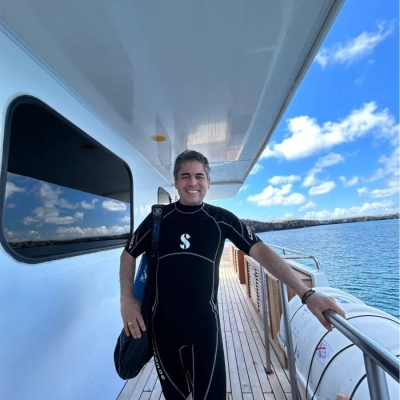
Marcel PerkinsManaging Director, Latin Trails
I look for people with real experience when hiring for adventure travel, especially somewhere like Antarctica where you can't mess up. I always ask candidates what they'd do if we had to cancel an expedition day—how they'd keep guests happy and safe. We figured out this question after some trial and error, but the detailed, creative answers tell me right away who can think on their feet. I ignore textbook responses and watch for practical solutions instead.
Map Talent To Revenue Exposure

Michael LawManaging Partner, Lennard Commercial
In a small brokerage, I almost always lean toward the high-potential newcomer for support roles and the seasoned hire for revenue-generating ones. The screening prompt that consistently worked for me: I ask candidates to walk me through a deal or project that fell apart and what they did next. Experienced hires reveal whether they have real scar tissue or just polished stories. High-potential newcomers reveal coachability and how they handle adversity before they've developed habits that are hard to undo.
Prize Discernment Amid Time Pressure

Saulo CannyDirector, Canny Electrics
A resume should not settle the question on its own. In a small business, the true test is whether a candidate can combine judgement, tempo and trustworthiness in the same role. A seasoned hire may offer immediate confidence, but a newcomer with strong reasoning and personal discipline can become the more valuable choice surprisingly quickly. The wrong hire usually talks in credentials. The right hire explains how decisions get made when time is tight and the picture is incomplete.
I have found one prompt especially revealing: describe a time you were asked to move fast but believed slowing down briefly would prevent bigger problems. How did you make that case and what was the outcome? It uncovers courage, communication and practical risk awareness.
Frame Staff As Operational Risk

Jeremy MaherCo-Owner, Phoenix Home Remodeling
We find the decision becomes clearer when we treat the role as a risk question instead of a talent question. We see that a seasoned hire is worth the cost when mistakes are costly and hard to fix. We choose a newcomer when the role benefits from curiosity and fresh thinking. We focus less on years worked and more on how well someone can make decisions in unclear situations without creating confusion.
We use one screening prompt that has been very useful in practice. We ask what the first month would look like if the process works on paper but frustrates people in reality. We look for answers that show empathy and a calm approach to change. We value those who observe first and act with care rather than rushing into action.